
For too long, finance has been defined by what has already happened.
Reporting the numbers.
Closing the month.
Managing the budget.
Explaining the variance.
All necessary. But no longer enough.
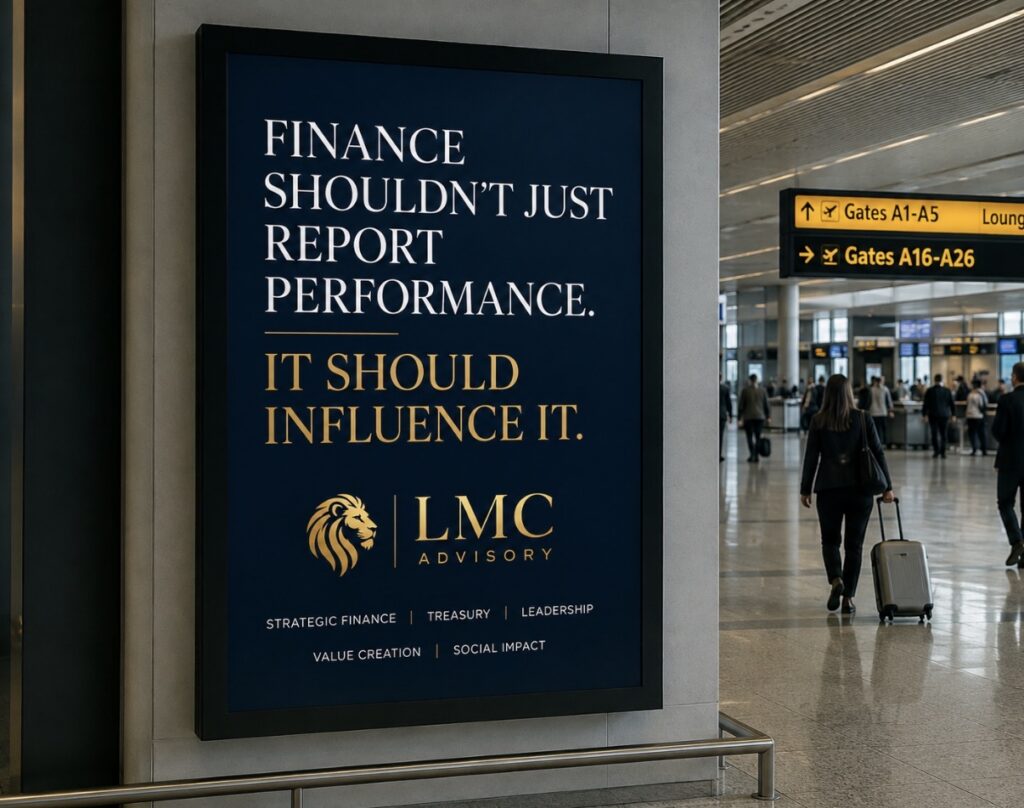
The modern finance function should help determine what happens next.
From reporting performance to shaping it
The strongest CFOs are moving beyond stewardship of the numbers and becoming strategic partners to the CEO, board and wider leadership team.
That means asking different questions.
Where should we allocate capital?
Which customers, products and markets genuinely create value?
Where is cash trapped in the business?
What risks are sitting within our FX, commodity or funding exposure?
Which investments will create the greatest return over the next three to five years?
And, critically:
What decisions should we be making today to create a more valuable business tomorrow?
This is where finance becomes strategic.

Cash is strategy
A business can report strong revenue and EBITDA while still destroying value.
Working capital can absorb growth. Poorly structured debt can restrict strategic options. Unmanaged currency or commodity exposure can erode margins. Capital can remain tied up in areas generating inadequate returns.
These are not simply finance issues.
They are enterprise-value issues.
A high-performing CFO therefore needs visibility beyond the P&L — across cash, treasury, funding, risk, operations and capital allocation.
Technology changes the opportunity
AI, automation and better data infrastructure should increasingly remove the manual work that has historically consumed finance teams.
But technology alone does not create a strategic finance function.
The real opportunity is what finance does with the capacity it releases.
Less time producing information.
More time interpreting it.
Less time explaining yesterday.
More time modelling tomorrow.
Technology should enable better judgement — not replace it.
The CFO as a value creator
The best finance leaders increasingly operate at the intersection of:
Strategic Finance | Treasury | Leadership | Value Creation | Social Impact
They understand the numbers, but they also understand the business behind them.
They challenge assumptions.
They connect strategy with capital.
They identify risk before it becomes a problem.
And they help leadership make better decisions when the answer isn’t obvious.
Because ultimately, the role of finance isn’t simply to tell the business where it has been.
It’s to help determine where it goes next.
LMC Advisory
Strategic finance leadership for businesses navigating growth, transformation and value creation.
Leave a Reply